



Your cart is empty
Your cart is empty :(


F1 IN SCHOOLS
STEM Racing is a global educational project created by Formula 1 itself, providing a hands-on STEM-based learning experience for students aged 12 to 19.
The goal of the project is to form a Formula 1 team that operates like a real company, where each member is responsible for a specific area. The competition includes several divisions: project management, engineering, financial management, graphic design, marketing, sponsorship, sustainability, and social media.


The competitions are divided into three stages: the state level, the national level, and the World Finals, which is the international stage. The champion teams of each stage qualify for the next one.
Each team carries out various projects, one of which is building the race cars. This begins by designing different body shapes, wings, and complete cars using the Autodesk Fusion 360 modeling software.

After the design phase, teams begin manufacturing the car. The first step is ordering an expanded polyurethane block, which is machined on a CNC machine and shaped into the cars body. The wings are made with a 3D printer, while other parts—such as bearings and eyelets—are purchased. Once all components are ready, the car is painted, assembled, and prepared for the track!

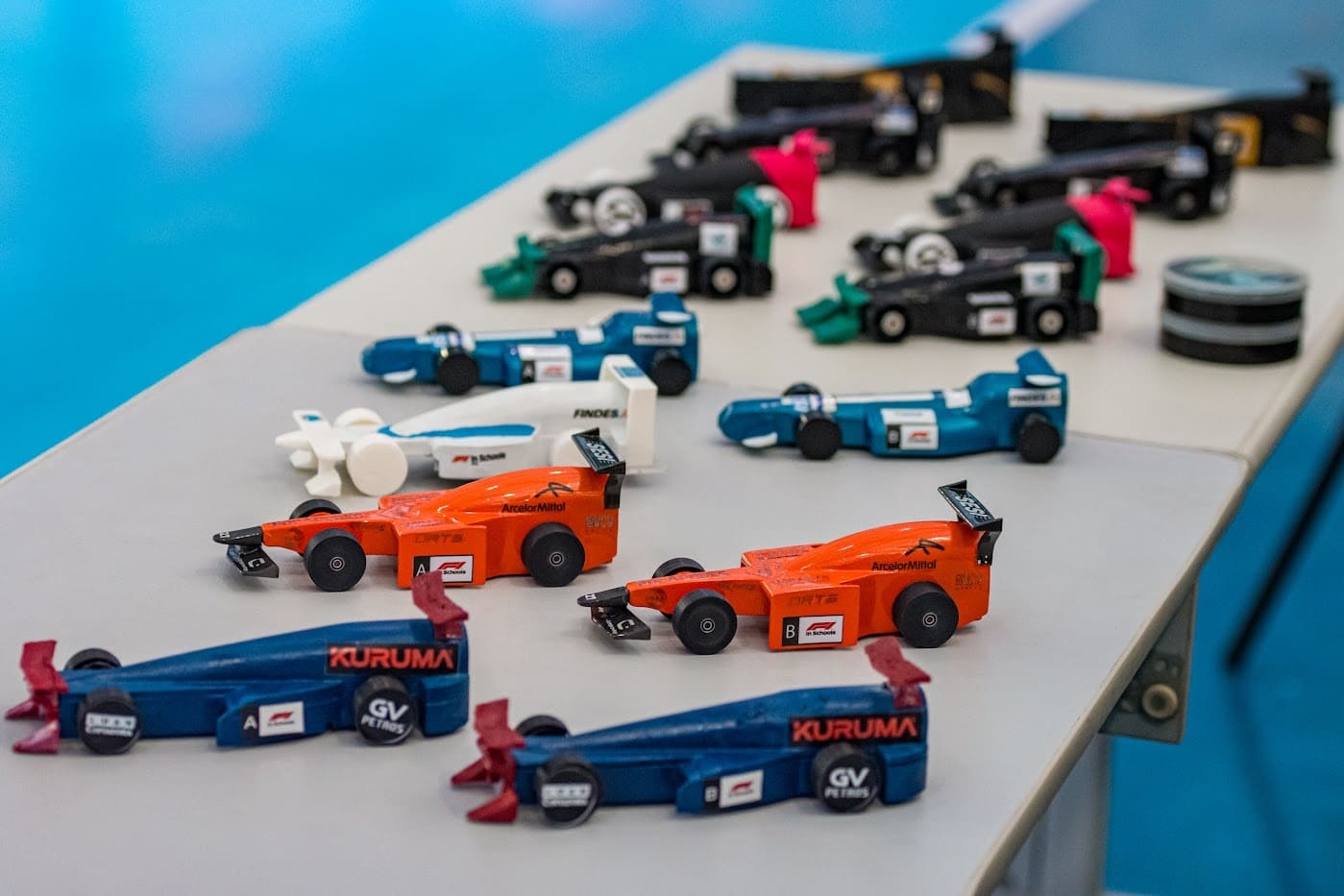
During races, the car is launched using a CO₂ cartridge attached to it, and it races down a 20-meter straight track, reaching speeds of up to 80 km/h. Besides the cars run time, the drivers reaction time is also measured. Just like in Formula 1, five lights turn on and off at a random moment, and the driver with the quickest reaction launches the car faster. How about training your reaction time just like the drivers do?
REACTION TIME
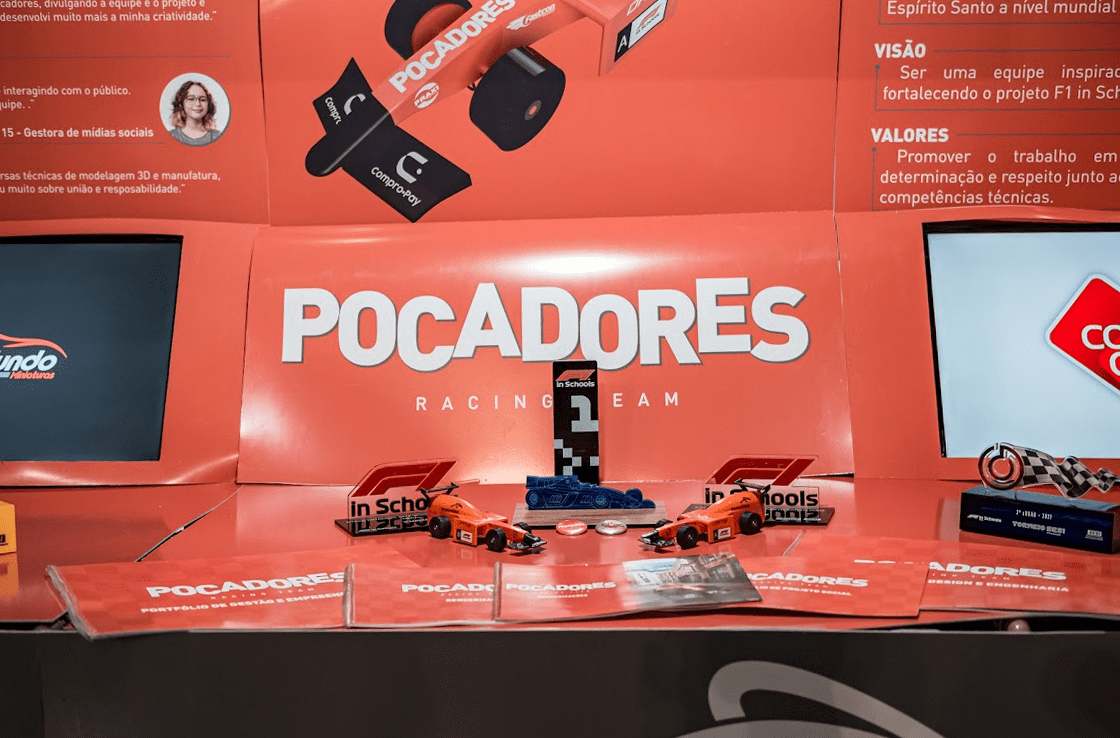
0.000Another component evaluated during the competition is the team booth, where teams present information such as their history and sponsors. In addition, teams must create portfolios summarizing everything accomplished in each area throughout the season.